Plan Your 2026 Real Estate Moves: Best Time To Buy Or Sell A Home

Plan Your 2026 Real Estate Moves: A Guide to the Best Home Buying and Selling Seasons
Timing isn’t everything in real estate, but it can be the difference between saving $20,000 or paying a premium for a home, selling your home in 30 days versus waiting three months, or negotiating from a position of strength rather than uncertainty.
As we look toward 2026, understanding real estate seasonality has become more important than ever. With inventory levels normalizing and market conditions continuing to evolve, knowing when to buy or sell can dramatically affect price, competition, and negotiation leverage. Whether you’re a first-time buyer watching every dollar or a seller focused on maximizing returns, the season you choose matters.
The challenge is that not everyone can wait for the “perfect” market window. Job relocations happen in January. Growing families need more space in July. Retirement timelines don’t pause for spring. This guide breaks down the pros and cons of each season so you can make informed decisions within your real-world timeline.
Spring: Peak Selling Season (March-May)
 Spring consistently earns its reputation as the most active season in the housing market. Data shows homes listed in spring sell in as few as 33 days, compared to 49 days in winter.1 May also delivers the highest seller premium of the year, averaging 13.1% above market value, which translates to faster closings and stronger final sale prices.²
Buyer psychology plays a major role during spring. Warmer weather increases open house attendance, longer daylight hours allow more showings, and families aim to move before the school year begins. Blooming landscaping and fresh greenery also enhance curb appeal in ways winter staging cannot replicate.³
The Competition Factor
The advantages of spring come with increased competition. Sellers must price accurately, stage professionally, and market aggressively to stand out. Buyers benefit from the largest inventory of the year but face stronger competition. In May and June, 35% of buyers pay above list price compared to just 24% in January, making bidding wars more common and decisions more time-sensitive.4
Summer: Extended Peak Season (June–August)
As spring transitions into summer, market momentum remains strong. June typically sees the highest number of home sales of the year, with more than 16,500 homes selling per day nationwide.¹
The Family Timeline
Summer aligns naturally with family schedules. School breaks allow children to move without disrupting education, while warm weather and long days make showings and moving logistics easier. Outdoor features such as pools, patios, and landscaping show at their best, and higher prices reflect the premium buyers pay for peak-season convenience.
Late Summer Shifts
By August, subtle shifts appear. Listings that did not sell in spring or early summer may begin to feel stale, and buyer urgency often eases as school resumes. Competition softens slightly, though prices typically remain elevated, making late summer a transition period where patient buyers can find opportunity.
A practical consideration is moving costs. Nearly half of all household moves occur between June and August, driving up demand for movers and rental trucks and making summer the most expensive time of year to relocate.5
Fall: Underrated Opportunity Season (September–November)
 Fall is often overlooked, yet it can be one of the most strategic times to buy or sell real estate. While spring dominates conventional wisdom, experienced buyers and sellers increasingly recognize the advantages of reduced competition and motivated participants.
Less Competition, More Serious Players
A significant share of annual home sales occurs in the fall, a fact many consumers overlook. With fewer competing listings, homes receive more attention, and buyers remaining in the market tend to be serious, qualified, and ready to act.³
October often delivers some of the best buying conditions of the year. Seller premiums drop to approximately 8.8% above market value as demand cools, and prices typically dip from summer highs.², 4 For first-time buyers in particular, fall can provide better value without the bidding wars common in spring and summer.
The Urgency Factor
Fall introduces natural urgency. Buyers aim to close before the holidays or winter weather, while sellers may be motivated by tax considerations or the desire to avoid a winter listing. Comfortable temperatures also make showings more appealing.
Winter: Value Season (December–February)
 Winter carries an undeserved reputation in real estate. For buyers with flexibility, it often offers the strongest negotiating position of the year.
The Numbers Don’t Lie
In January, only 24% of buyers pay above list price, compared with 35% in May and June.4 In winter, homes remain on the market longer—averaging 49 days versus 31 days during peak season—giving buyers more time, less pressure, and more negotiating power.1 Sellers who list during winter are often highly motivated. Not to be overlooked, moving companies typically offer their lowest rates in the winter season.
Winter’s Challenges
Winter does come with trade-offs. Sellers face lower buyer traffic, limited curb appeal, holiday distractions, and shorter daylight hours for showings.
Yet winter offers advantages. Less competition can help if you price aggressively and present well, and buyers who do visit are highly motivated, often relocating for jobs. Warm-climate markets like Florida and Arizona see smaller winter slowdowns, making location important.1
Snow and ice create safety hazards, and cold weather makes moving harder. At the same time, winter also reveals important property details, such as heating efficiency, drafty windows, and roof performance—valuable insights for home buyers.
Regional Differences: Why Location Matters
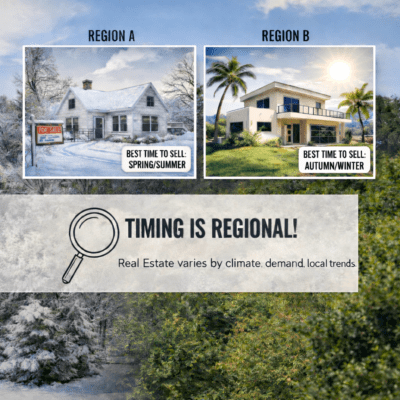
Seasonality varies significantly by region, making location a critical factor in real estate timing strategies. The Midwest and Northeast experience the most dramatic seasonal swings as harsh winters push most transactions into a narrow window between May and August. In these markets, daily home sales often more than double from January to June, and states such as Illinois and Ohio experience pronounced annual price swings.
Southern and Western markets tend to maintain steadier year-round activity due to milder climates. California and much of the South experience smaller winter slowdowns due to weather. Some markets even peak during winter. Phoenix, Arizona, for example, often sees its strongest selling activity in late November. Understanding these local patterns is essential, as local market dynamics matter far more than national statistics.
Seller Pricing Strategies by Season
Effective pricing strategies must adapt to seasonal market conditions. A strategy that succeeds in May may fail in December. A strategy that succeeds in December may fail in May. This makes timing a key component of pricing decisions.
Spring and Summer Pricing Strategy
During peak season, competitive pricing can generate multiple offers. Strategically, listing 10–15% below comparable sales may attract greater attention and drive offers above list price. Psychological pricing also plays an important role. Homes listed just below round numbers, such as $349,000 instead of $350,000, often perform better online. Highlighting seasonal features like natural light, outdoor living spaces, and well-maintained landscaping can help justify premium pricing.³
Fall Pricing Strategy
As competition declines in the fall, pricing should reflect market reality. Listing slightly below spring comparable sales can stimulate buyer activity and attract motivated buyers seeking year-end closings. Flexibility becomes a strategic advantage rather than a concession.²
Winter Pricing Strategy
Winter pricing typically requires a more aggressive approach to attract a small buyer pool. Homes priced 5–10% below spring values often generate faster interest. Motivated sellers should focus on value over premium pricing. Winter buyers are not casual bargain hunters; they are typically motivated purchasers seeking value that justifies moving during a less convenient season.¹
Year-round best practices stay consistent: use a Comparative Market Analysis, consider current market conditions, account for unique property features that algorithms may overlook, and monitor comparable sales while staying open to adjustments.
Buyer Offer Strategies by Season
Spring and Summer Competition
Peak-season buyers must act decisively. Mortgage pre-approval is essential to signal seriousness and ability to move quickly with a purchase. Competitive offers may require offering above asking price, using escalation clauses, or offering flexible closing dates.
Fall and Winter Leverage

Negotiating power shifts in the buyer’s favor as competition from other buyers declines. During fall and winter, buyers can more easily request concessions such as closing cost assistance, home warranties, repairs, appliances, or fixtures. Inspection findings also become stronger negotiation tools as motivated sellers grow more flexible later in the season.¹
LendingTree found January home buyers paid about $23k less than May buyers for the same size home. And that’s largely because the price per square foot drops off in the winter due to less buyer competition.
JANUARY BUYERS COULD SAVE THOUSANDS
Year-Round Negotiation Fundamentals
No matter the season, understanding the seller’s motivation is key. Support your offer with market data rather than emotion, and build rapport when possible. Stay calm and avoid emotional decisions.
Have your agent handle offers and counteroffers to reduce tension. Know your limits and walk away from deals that don’t fit your goals. In buyer’s markets, be assertive; in seller’s markets, make offers strong and decisive. The fundamentals stay the same, though their intensity shifts with the season.
Bottom Line
Seasonality creates both opportunities and challenges for both home buyers and home sellers. Personal circumstances should ultimately guide timing decisions. Spring and early summer deliver the highest prices and fastest sales, while winter offers buyers the greatest negotiating leverage.
The best time to move is not about chasing the perfect season—it’s about aligning your goals, timeline, and market conditions to make the smartest decision for you.
Reach out if you’d like to discuss strategies for buying and/or selling a home in the Greater Charlotte area and which seasons may work best for your personal goals, timeline, and needs. I’m never more than a call, text, or email away.
Sources
1. National Association of REALTORS®. Navigating the Housing Market: A Seasonal Perspective. 2024.
https://www.nar.realtor/blogs/economists-outlook/navigating-the-housing-market-a-seasonal-perspective
2. Bankrate. Best Time to Sell a House. 2024.
https://www.bankrate.com/real-estate/best-time-to-sell-house
3. Investopedia. How Seasons Impact Real Estate More Than You Think. 2024.
https://www.investopedia.com/articles/investing/010717/seasons-impact-real-estate-more-you-think.asp
4. Zillow.
https://www.zillow.com/learn/best-time-to-buy-a-house/
5. My Moving Journey.
https://mymovingjourney.com/blogs/moving-in-peak-season-vs-off-season