
Online Home Value Estimates: Can You Trust Them?

Online Home Value Estimates: Can You Really Trust Them?
For millions of homeowners, checking their Zillow Zestimate has become as routine as checking a stock portfolio — a quick hit of seeing your home’s estimated value, right at your fingertips. With 178 million monthly users and over 100 million homes covered, the platform’s instant, free, and convenient appeal is undeniable.
But here’s a famous cautionary tale: Spencer Rascoff, Zillow’s former CEO, sold his own home for a staggering 40% less than its Zestimate.1 This story highlights a critical fact that many homeowners don’t realize: Zillow itself calls its Zestimate a “starting point… not an appraisal.”2
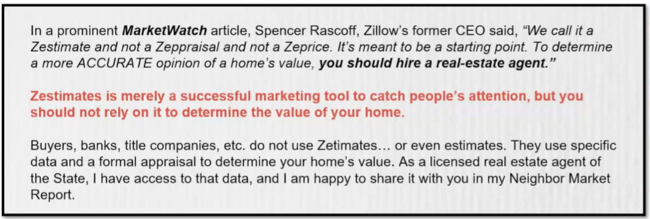
If the creator of the system can be off by that much, how accurate are online home valuations for the rest of us? Relying on an automated number for your most valuable asset could be a mistake worth tens of thousands of dollars. Below, we’ll examine how these powerful algorithms work, reveal the data behind their wildly varying accuracy rates, identify what they systematically miss, and show why local, human expertise remains irreplaceable when precision—and your equity—matters most.
How These Algorithms Actually Calculate Your Home’s Value
Automated Valuation Models are algorithms designed to crunch massive amounts of data in seconds. Think of them as sophisticated calculators—impressive in computational power, but limited by the quality and completeness of their inputs.3
These systems analyze public records, tax assessments, recent comparable sales from the MLS, and basic property characteristics like bedrooms, bathrooms, and square footage.4 For standard properties with lots of recent comparable sales, this data-driven approach can produce reasonable estimates.
However, the fundamental limitation is that these models rely purely on historical data and never actually visit your property. These models “look backward by design.” They use what sold yesterday to predict what might sell tomorrow. While an algorithm can tell you that your home has three bedrooms, it cannot tell you that the primary suite has stunning morning light or views that make buyers fall in love with a home.
Accuracy and When Online Estimates Miss the Mark
When discussing AVM accuracy, you’ll encounter the term “median error rate.” This measures how far the estimate typically deviates from the actual sale price — specifically, half of all estimates fall within this percentage, and half fall outside it. Lower is obviously better, but context is everything.
The On-Market vs. Off-Market Divide
Here’s where online home estimate accuracy gets interesting — and where most homeowners make their biggest mistake.
| Platform | On-Market Error | Off-Market Error |
|---|---|---|
| Zillow | 1.94% median | 7.06% median |
| Redfin | 1.98% median | 7.72% median |
When a home is actively listed for sale, AVMs perform surprisingly well. Zillow’s median error rate drops to just 1.83%–1.94%, while Redfin achieves 1.98%.2,5 While these are impressive numbers, keep in mind that when your home goes on the market, these algorithms access fresh, verified MLS data, including photos, detailed descriptions, are real-time pricing intelligence.
For off-market properties (which is what your your home would be if you’re just curious about its value), the median error rate skyrockets — Zillow’s accuracy drops to 7.06%, while Redfin’s falls to 7.72%. That’s not a minor adjustment. That’s a fundamental breakdown in reliability.
What This Means In Actual Dollars
On a $400,000 home, a 7% median error translates to +/- $28,000 or more. And keep in mind, that’s the median difference, which means half of all estimates miss by even more. On a $600,000 property, the potential discrepancy can exceed $40,000. Discrepancies for luxury properties can easily reach six figures. The difference between an accurate valuation and an algorithm’s “best guess” can be huge, so it’s important to understand their limitations.
The Algorithm’s Blind Spots: What Online Estimates Cannot See
 The Condition Conundrum. This is the AVM’s Achilles heal. Every algorithm must assume your home is in “average condition.” Your newly renovated kitchen with custom cabinetry? Average. Your finished basement adding 600 square feet? Average. Your brand-new HVAC system? Average. Flip it around—deferred maintenance, a crumbling driveway, outdated bathrooms—all get the same treatment. Condition often accounts for significant price variations between otherwise identical properties.
Location Nuances and Human Appeal. Algorithms understand neighborhoods, but struggle with subtleties. Two identical homes—one on a quiet cul-de-sac, another backing a busy road… both get the same value from an algorithm, but are vastly different to buyers in terms of appeal and value.
Market Lag and Unique Properties. Because AVMs depend on historical sales data, they lag behind current conditions. In rapidly shifting markets, the lag can render estimates nearly useless. For custom homes, luxury properties, anything unique, AVMs often fail completely as there simply aren’t comparable sales to analyze.
The Solution: Why a CMA Is the Indispensable Tool
A Comparative Market Analysis (CMA) is the professional valuation tool that real estate agents provide. It’s the bridge between raw data and real-world value—combining analytical power with human expertise and local knowledge.
What Makes a CMA Superior
Physical Inspection: Unlike an algorithm, your agent actually walks through your home. They see the quality of updates, evaluate floor plan flow, notice natural light, and assess the overall “feel” that influences buyer psychology. They identify value-adding features no database captures.
Micro-Local Knowledge: Agents live and breathe their local markets. They know which streets command premiums, understand seasonal patterns and inventory levels, and track current buyer demand. They explain not just what your home is worth, but why—and how to position it strategically.
Real, Adjusted Comparables: Your agent doesn’t just pull recent sales—they analyze and adjust them. They can justify why your home is worth $20,000 more than one down the street: “Their kitchen had 1990s oak cabinets; yours has modern shaker style buyers want, justifying a $15,000 adjustment. They had builder-grade carpet; you have refinished hardwood, worth another $10,000.”
| Feature | AVM (Zestimate / Redfin) | CMA (Agent Valuation) |
|---|---|---|
| Who provides it | Automated algorithm | Licensed local agent |
| Property inspection | No physical walk-through | Yes, condition is assessed |
| Neighborhood nuance | Limited (based on ZIP/broad area) | Deep local insight (street, school zones, micro-market) |
| Update frequency | Automated (can lag behind market shifts) | Real-time human context |
| Accuracy | ~2% (on-market), ~7% (off-market) | Typically closer to final sale price |
| Pricing strategy | None (provides only a number) | Tailored strategy (under-list, market positioning) |
| Best use | Rough, initial estimate | Serious pricing & selling decisions |
Why Pricing Correctly From Day One Matters
 For sellers, an accurate Comparative Market Analysis (CMA) prevents the two most costly mistakes in real estate: overpricing and underpricing. Overpricing based on an inflated online estimate can cause your home to sit on the market too long. Each week without meaningful interest or offers weakens your negotiating position and signals to buyers that something might be wrong with the property. This often results in multiple price reductions and ultimately selling for less than if it had been priced correctly from the start.
On the other hand, underpricing based on a conservative or outdated algorithm means leaving tens of thousands of dollars on the table. A properly executed CMA evaluates the real-time data—active listings, pending sales, and recently sold homes—to identify your true market position. By combining verified data with local expertise, your agent ensures your home enters the market competitively and captures the attention of qualified buyers immediately.
In real estate, you rarely get a second chance at a first impression. The initial list price sets buyer expectations and determines how long your property stays on the market. Pricing your home accurately from day one builds confidence, drives stronger offers, and shortens your time to close—benefits only a professional CMA can deliver.
When Online Valuations Are Useful
For Sellers: Never set your listing price based solely on an online estimate. Use it as a conversation starter, but rely on your agent’s CMA to build a strategic, defensible pricing plan.
For Buyers: Use online estimates to establish a general ballpark before you start searching, but trust your agent’s analysis of recent comparable sales when crafting offers. The algorithm doesn’t know that three other buyers are submitting offers this weekend—your agent does.
Ready to Know What Your Home Is Really Worth?
When it comes to your largest financial asset and a decision that will impact your life for years, online estimates can be a starting point. But when you’re ready for real numbers you can count on, it’s time for a professional opinion. Contact us today for a complimentary, no-obligation Comparative Market Analysis and discover your home’s true market value — backed by current market dynamics, real data, real expertise, and real-world experience — something the internet simply can’t match.
Sources
Thinking about buying or selling a home in the Charlotte area?
Nina Hollander is an expert local real estate agent serving Charlotte and surrounding communities. Whether you’re just starting your search or ready to make a move, Nina is here to provide trusted guidance every step of the way. Contact Nina today to get personalized help with your real estate goals.
Thinking about selling your Charlotte home? Request our free Charlotte home value report and to see what your home may be worth in today’s real estate market.
Check out the Real Estate Market in Charlotte NC
I work hard for my clients to ensure they have the best selling or buying experience possible. For comprehensive real estate information in the Greater Charlotte NC area, check out the links below!