
Real Estate Scams: Spotting Fraud To Protect Your Investment
Real Estate Scams: How to Spot Fraud and Protect Your Investment
 Real estate scams are surging—and becoming more sophisticated than ever. According to the FBI, nearly 10,000 Americans fell victim to real estate fraud in 2024, with reported losses of over $173 million. Even more alarming, one in four buyers or sellers encounter suspicious activity during the closing process, and one in 20 end up victims of wire fraud.
These are not rare, isolated cases. Today’s scams are highly organized, technology-driven operations that can trick even seasoned investors. From wire transfer fraud to fake rental listings, title theft, and impostor agents, criminals exploit the speed and convenience of digital real estate transactions.
Whether you’re a first-time homebuyer, an experienced investor, or a property owner, knowing the warning signs is essential. Here’s how to recognize the most common real estate scams and protect yourself.
1. Wire Transfer Fraud: The Costliest Real Estate Scam
 Wire fraud typically strikes at closing, when buyers are under pressure and most vulnerable. Criminals hack or spoof emails from agents, attorneys, or title companies, then send fake wiring instructions for down payments.
The emails look authentic—professional language, logos, and urgency about closing deadlines. Victims end up wiring their entire savings to fraudsters. In 2023 alone, wire fraud caused $145 million in reported real estate losses, with average losses exceeding $70,000 per case.
Red flags include:
-
Last-minute wiring changes marked “urgent”
-
Slight email address misspellings (e.g.,
titlle-co.com) -
Pressure tactics demanding immediate action
Protection tip: Always verify wiring instructions by phone or in person using verified contact details. Never rely solely on email. If fraud occurs, report immediately to your bank and the FBI’s Crime Complaint Center within 24–72 hours. Check out the National Association of Realtors Guide To Wire Fraud Prevention.
2. Rental Listing Scams: Too Good to Be True
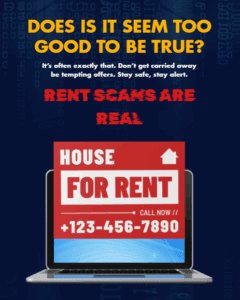 Rental scams prey on urgency. Fraudsters post fake listings—often copied from legitimate ones—advertising below-market rents with beautiful photos. They pose as “landlords” who claim to be out of the country, making in-person showings impossible.
Common signs of rental scams:
-
Unusually low rent for the location
-
Landlord can’t meet in person
-
Requests for upfront deposits before property tours
Protection tip: Never send money without verifying the property in person. Avoid wire transfers, gift cards, or cryptocurrency for rental deposits. Property owners should also monitor for fake rental ads using their addresses. Federal Trade Commission Rental Listing Scams.
3. Title and Deed Fraud: Stealing Property Ownership
 Title fraud occurs when criminals forge deeds to transfer ownership of your property. Once the title is in their name, they can take out loans, sell the home, or rent it.
Vacant homes, investment properties, and homes without mortgages are most at risk. Between 2019 and 2023, over 58,000 victims reported $1.3 billion in real estate losses, much of it related to title scams.
Warning signs include:
-
Unexpected foreclosure or mortgage notices
-
Missing property tax bills
-
Deed transfer notifications you didn’t authorize
Protection tip: Monitor your property records through county databases and sign up for fraud alerts.
4. Fake Buyers, Sellers, and Realtors
Impersonation scams are skyrocketing. Fraudsters pose as buyers, sending fake cashier’s checks, or as sellers, attempting to list and sell homes they don’t own. In 2023, more than half of U.S. Realtors (54%) encountered seller impersonation fraud attempts.
Criminals also create fake Realtor profiles, stealing legitimate agents’ names and photos to collect bogus fees.
How to protect yourself:
-
Verify IDs and credentials through state licensing databases
-
Independently confirm property ownership through public records
-
Be cautious of unsolicited offers, especially cash deals that demand quick action
5. Bait-and-Switch Schemes
These scams lure buyers or renters with attractive deals, then change terms at the last minute:
-
Rental bait-and-switch: “Your dream property isn’t available anymore—but here’s a pricier option.”
-
We Buy Houses scams: Inflated offers that collapse into renegotiations, leaving sellers with far less than market value.
-
Mortgage bait-and-switch: Unrealistic rates requiring upfront fees, then switched to higher terms.
Protection tip: Get everything in writing and avoid non-refundable upfront fees. If a deal changes suddenly, step back and reevaluate.
Best Practices: How to Protect Yourself From Real Estate Fraud
-
Work with licensed professionals: Verify real estate agents, attorneys, mortgage lenders, and title companies.
-
Confirm identities: Always ask for photo ID and verify credentials independently.
-
Safeguard personal data: Use strong passwords, 2-factor identification, and never email financial details or social security numbers.
-
Watch for pressure tactics: Legitimate deals allow time for due diligence.
-
Use secure payments: Only send funds to verified escrow accounts.
-
Monitor property records: Sign up for fraud alerts and check county databases regularly.
-
Report fraud immediately: Notify your bank, police, the FBI IC3, and the FTC.
Bottom Line
Real estate scams exploit trust, urgency, and the complexity of transactions. The warning signs—unverified identities, last-minute changes, pressure tactics, and “too good to be true” offers—are consistent across all schemes.
Whether buying, selling, or renting, the best protection is verification and patience. Work with trusted professionals, question unusual requests, and never rush into transactions.
If you’re planning a real estate deal, consult an experienced Realtor who can help you navigate safely and protect your investment from fraud.
Thinking about buying or selling a home in the Charlotte area?
Nina Hollander is an expert local real estate agent serving Charlotte and surrounding communities. Whether you’re just starting your search or ready to make a move, Nina is here to provide trusted guidance every step of the way. Contact Nina today to get personalized help with your real estate goals.
Thinking about selling your Charlotte home? Request our free Charlotte home value report and to see what your home may be worth in today’s real estate market.
Check out the Real Estate Market in Charlotte NC
I work hard for my clients to ensure they have the best selling or buying experience possible. For comprehensive real estate information in the Greater Charlotte NC area, check out the links below!